
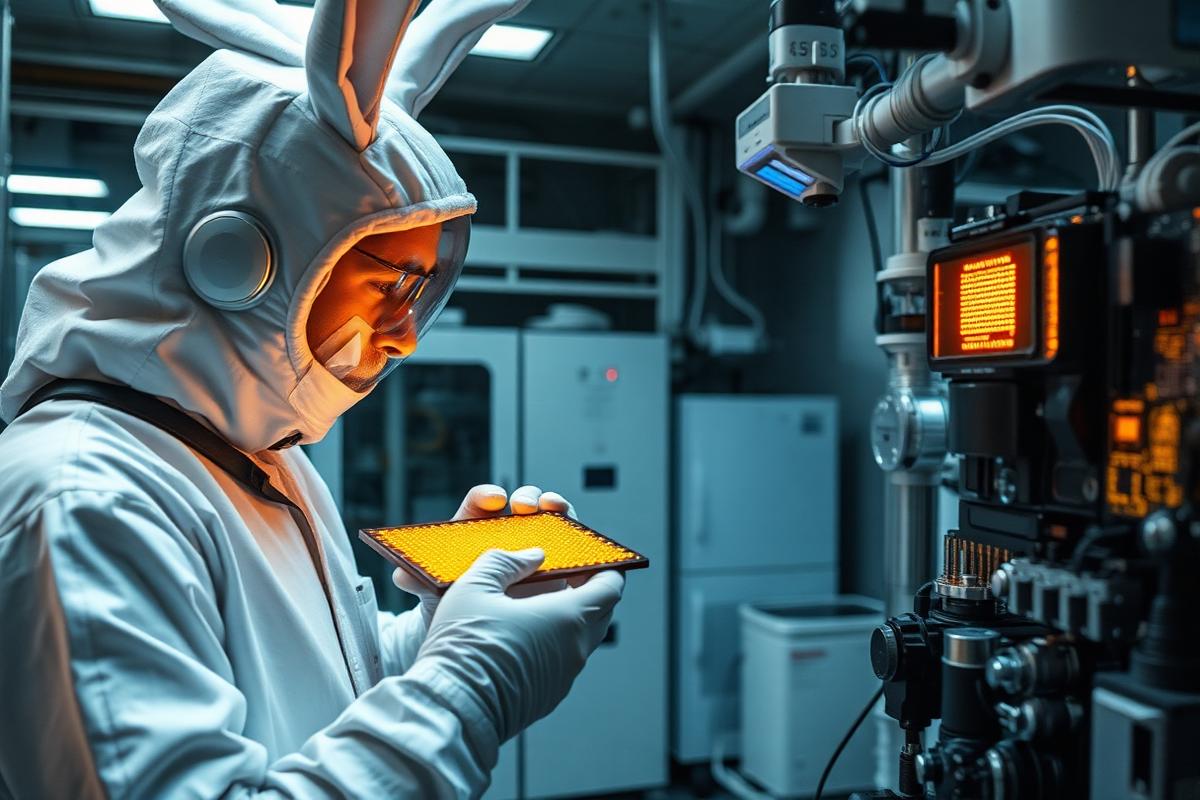
HSINCHU, Taiwan — In a sealed building on the outskirts of this science park, in air scrubbed to be thousands of times cleaner than a hospital operating room, a machine the size of a bus prints patterns onto silicon with light so extreme it does not exist naturally on Earth.
The machine costs roughly $380 million. There are perhaps two hundred like it in the world, and the industry that owns them — the semiconductor industry — is in the early stages of the most expensive technological contest ever waged: the race to mass-produce chips with features measured in single-digit atoms.
The stakes are difficult to overstate. Every advanced economy now treats chipmaking as strategic infrastructure on par with energy. Over the past four years, governments on three continents have committed more than $400 billion in subsidies to lure fabrication plants, and the map of production is being redrawn — new facilities rising in Arizona, Saxony and Kyushu even as Taiwan and South Korea defend their lead.
“We are printing the nervous system of the modern world,” said Dr. Wei-Lun Chang, chief technologist at one of the foundries here, standing before a viewport glowing amber. “And the pencil keeps getting sharper.”
The physics is becoming punishing. At two nanometers — the node the industry is now bringing to market — the transistors' gates are narrower than the wavelength of the light that makes them, and yield, the share of working chips per wafer, has become the industry's most closely guarded secret. Executives who discuss the number publicly tend to stop discussing it publicly.
The economics are punishing, too. A single new fabrication plant now costs upward of $25 billion and must run near capacity for a decade to pay for itself. That arithmetic favors the giants and has quietly frozen out all but a handful of players, concentrating the world's most essential technology in fewer hands than ever.
For the engineers in the cleanroom, though, the geopolitics dissolve into a simpler, older pleasure. “Every generation, they say the physics will stop us,” Dr. Chang said, tapping the viewport. “Every generation, the physics says: closer.”

