GENEVA — After four days of round-the-clock bargaining that twice appeared on the verge of collapse, negotiators from 94 countries reached a landmark agreement early Sunday on a $300 billion annual fund to help poorer nations adapt to a warming planet.
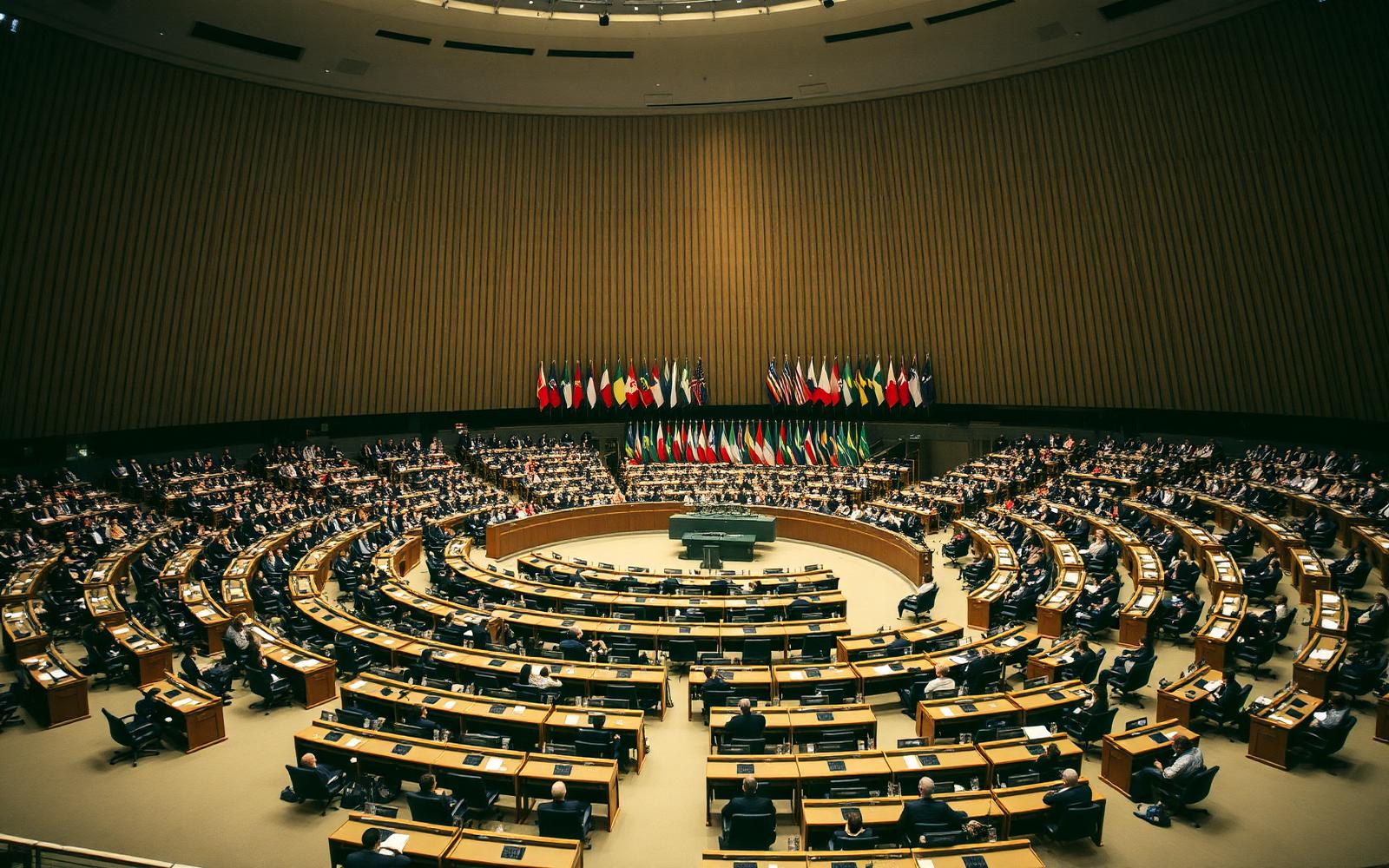
The accord, announced in the grand assembly hall of the Palais des Nations just after midnight, marks the most significant expansion of international climate finance in more than a decade. It binds industrialized nations to fixed contribution schedules for the first time and creates an independent board to audit how the money is spent.
“We came to Geneva divided by history,” said Amara Diallo, the Senegalese diplomat who chaired the final negotiating session, her voice breaking as she brought down the gavel. “We leave united by necessity.”
The talks nearly unraveled on Friday evening, when a bloc of oil-producing states threatened to walk out over language calling for an “orderly phase-down” of fossil fuel subsidies. A compromise drafted overnight by Swiss and Brazilian mediators replaced the phrase with a commitment to “rationalize inefficient subsidies consistent with national circumstances” — a formulation vague enough for every delegation to claim victory.
Under the agreement, contributions to the fund will be assessed on a sliding scale tied to emissions and national income, with the first disbursements expected by early 2028. Island nations, which had demanded guaranteed access to the money, won a provision reserving at least 20 percent of the fund for countries facing what the text calls “existential climate risk.”
Reaction poured in from capitals around the world. The European Commission called the deal “a down payment on survival,” while a coalition of environmental groups warned that the figure, though triple the previous commitment, still falls short of the trillion dollars a year that some economists say is required.
Implementation will now fall to a transition office to be based in Nairobi, which must recruit staff, design the auditing rules and open the fund's first call for proposals within 18 months. Veterans of past climate agreements cautioned that the distance between a midnight deal in Geneva and money flowing to a flood wall in Dhaka has historically been measured in years, not months.
Still, as delegates embraced on the assembly floor in the small hours of Sunday morning, the mood was one of exhausted relief. “Nobody got everything,” said one senior European negotiator, declining to be named because the talks were confidential. “That is how you know it might actually hold.”